




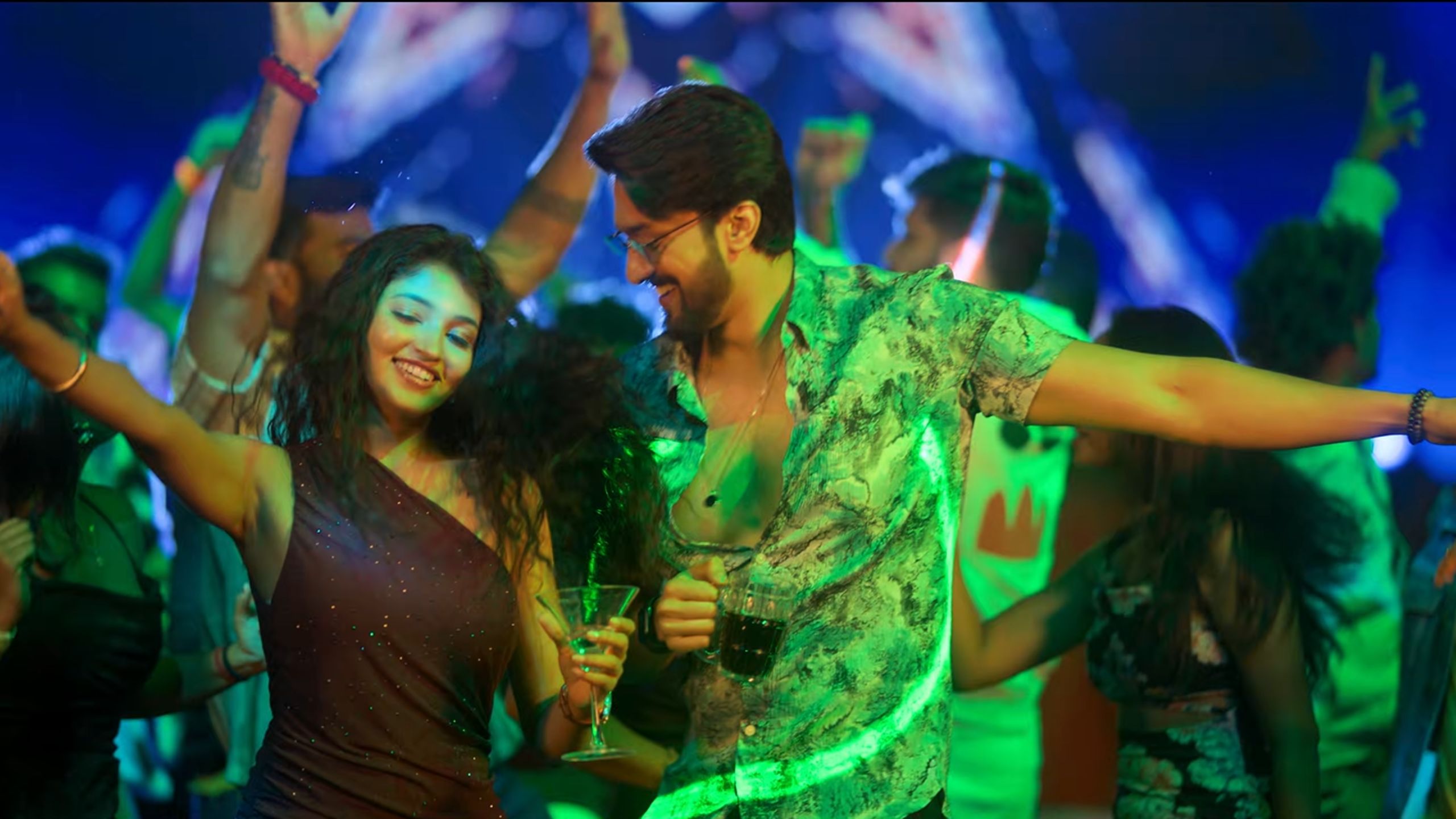
Title: SPARK, Producer: Garima and Avinash Vasishta, Direction: Mahanthesh Handral, Cinematography: Swamy J. Gowda, Music: Sachin Basrur, Cast: Niranjan Sudheendra, Premkumar, Rachana Inder, Bhavana (Jackie), Ramesh Indira, Abhay Vasishta, Ashwin Haasan, Dharmanna Kadur, Vijay Chendur, Ashwath Ninasam, Mahantesh Hiremath and others.
SPARK lives up to its title, sparkling at several places with a clever narration style that holds the audience’s attention. The film presents a triangular conflict involving the police, the press and the judiciary, and its gripping second-half narration is particularly impressive. This is what can genuinely be called paisa vasool entertainment.
Director Mahanthesh Handral deserves kudos for setting up the story effectively. He establishes a strong foundation in the first half and gradually answers the questions raised along the way, while introducing several surprises in the second half with powerful support from the cast and technical crew.
At its core, the film begins as a tug-of-war between Abhiram (Niranjan Sudheendra), a journalist working for a television channel, and Ranjith Kumar (Premkumar), a serious and upright police officer. Things become more complicated when Ranjith Kumar’s sister Madhu (Rachana Inder) falls in love with Abhiram, something that is difficult for the principled cop to accept.
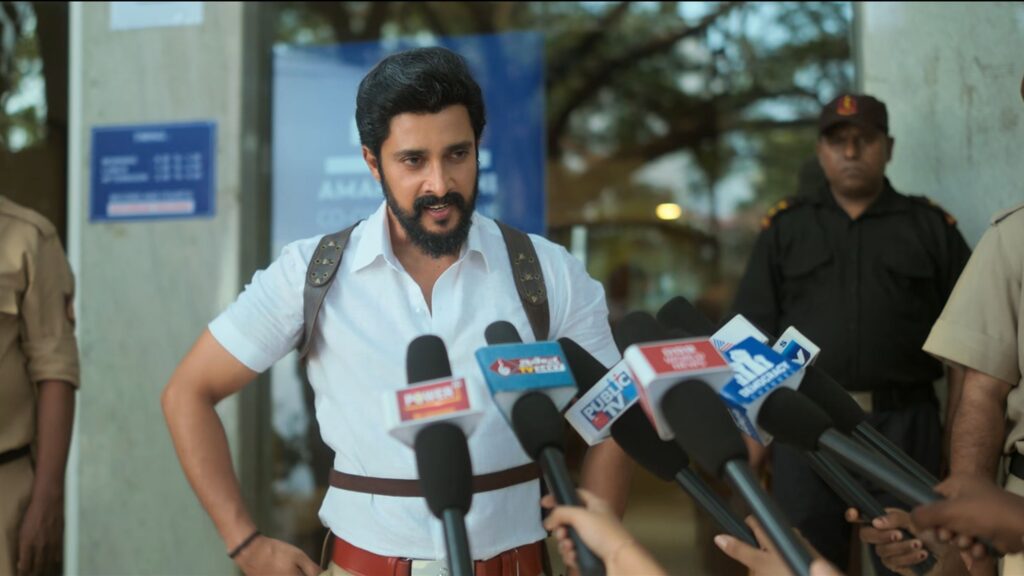
The narrative then shifts its focus towards the alleged siphoning of public funds from Amara Jyothi Cooperative Bank. The cop and the journalist find themselves on opposite sides as they take on the challenge of uncovering the culprits. As the screenplay progresses, we learn that more than 12 cooperative banks have allegedly cheated the public of their deposits.
The film also brings the issue of caste into the picture, showing how caste equations play a significant role in the rise and fall of cooperative banks and eventually become a major headache even for those occupying positions of political power.
The entry of the judiciary further complicates the situation. The upright police officer becomes a target, while the determined journalist sets out to uncover the forces operating behind the scenes. With those at the helm coming under increasing pressure, the second half gains considerable momentum.
How the public’s money is ultimately fought for, how the battle to retain and recover huge sums of money takes different routes, and whether the characters succeed in achieving justice are matters best experienced on the big screen.
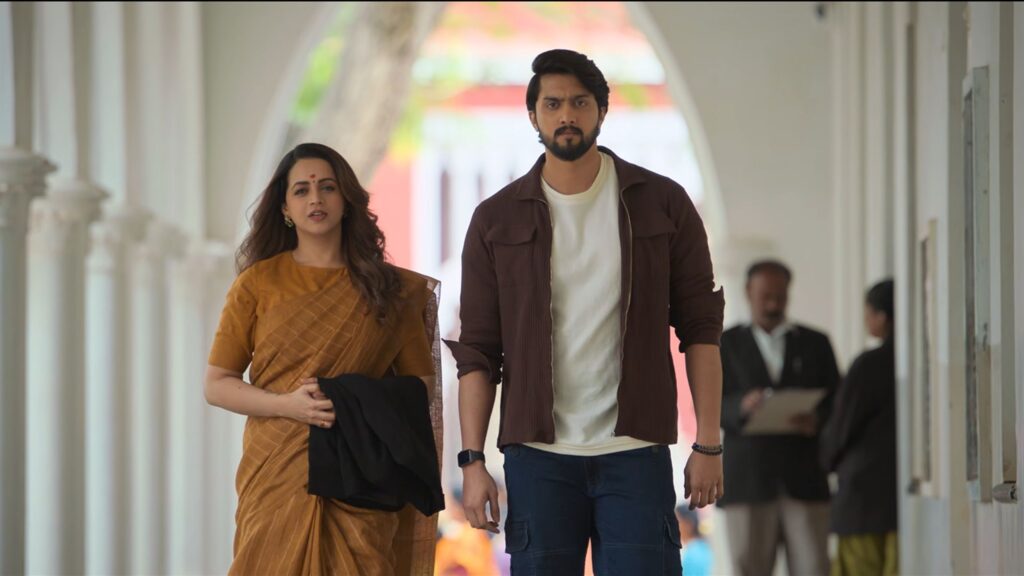
The three performers in the prime roles — Bhavana, Premkumar and Niranjan Sudheendra — excel in a well-written script supported by an engaging screenplay.
Bhavana’s role is particularly classy, and she handles it with considerable confidence. It is a different kind of role for her, combining beauty, intelligence and substance. She brings a strong screen presence to the character and delivers one of the film’s notable performances.
Premkumar is another major attraction. His character offers him two distinct shades to explore, and he handles both with impressive control. His performance keeps the audience invested whenever he appears on screen.
Niranjan Sudheendra continues to show why he has the potential for a long innings in Kannada cinema. With his tall frame, looks, attitude and screen presence, he fits the role of Abhiram convincingly. After Seetha Payana, this is another interesting choice for the actor. His character is presented as a journalist who goes far beyond what one would normally expect from a member of the press — but that dash adds to the entertainment quotient.
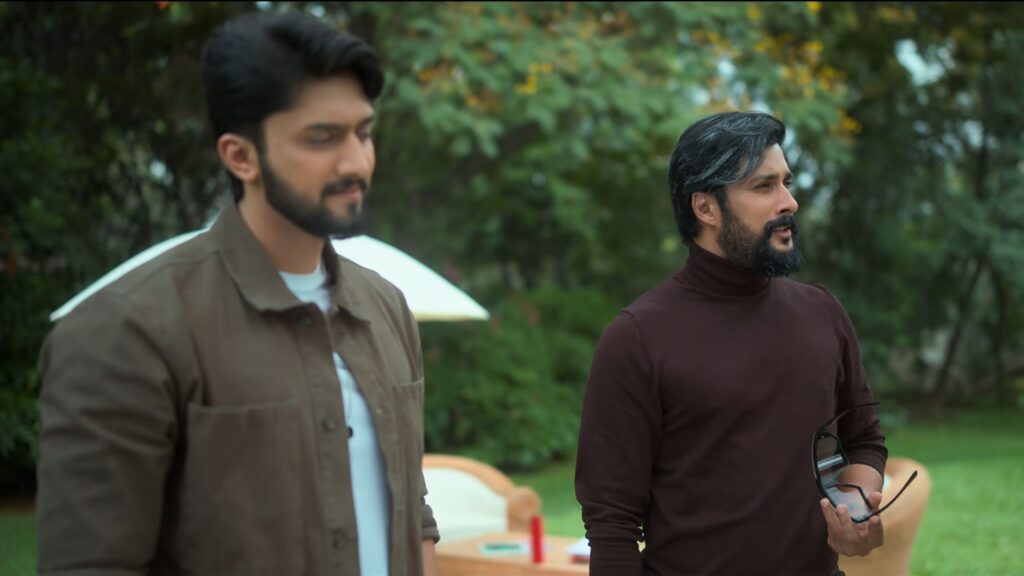
Rachana Inder, as the doctor Madhu, looks sweet and gives the character the required innocence and warmth. Ramesh Indira once again proves his strength as a gritty performer. Ashwath Ninasam, Abhay Vasishta in his debut, Dharmanna Kadur, Mahantesh Hiremath and the rest of the supporting cast add considerable weight to the proceedings.
The songs, particularly “Kannadada Haadonda Haadiruve” and “Shakalaka Boom Boom,” are good compositions from Sachin Basrur. His background score is equally effective and adds energy to several important sequences.
Swamy J. Gowda’s cinematography is another highlight. His command over the lens is evident throughout, with carefully composed frames and an effective visual treatment that enhances the impact of the narrative.
The dialogues and costumes also deserve special mention. They complement the characters and situations well and contribute to the overall presentation.
Overall, SPARK combines crime, journalism, police investigation, politics, banking and courtroom elements into an engaging commercial entertainer. Its strongest weapon is the way the second half keeps revealing new layers while maintaining the curiosity factor.
A gripping second half, strong performances and effective technical work make SPARK a paisa vasool entertainer.